Chemical safety
Dioxins, furans and PCBs are invisible contaminants. Analytical control supports compliance, quality and access to demanding markets.

GLOBAL HUB · HALAL · DIOXINS · ANALYTICAL SAFETY
Confidence does not begin at the detector. It begins with extraction, clean-up, traceability and the ability to show how the analytical result was built.
Design an analytical workflow CHAL-INT-2026-74D2DEXTech Heat + proprietary columns within the certified scope
Dioxins, furans and PCBs are invisible contaminants. Analytical control supports compliance, quality and access to demanding markets.
This discussion does not replace religious requirements. It adds evidence of safety, integrity, operational purity and traceability across the chain.
Automation and documentation reduce manual variability and strengthen reproducibility, comparability and auditability.
HALĀLAN ṬAYYIBAN
GSO 2055-1:2015 describes requirements across receiving, preparation, packaging, handling, transportation, distribution and storage. From an analytical perspective, chemical safety requires invisible risks to be investigated through valid methods, documented controls and consistent sample preparation.
X-TRACTION · DEXTECH HEAT · D-EVA · HRGC/HRMS
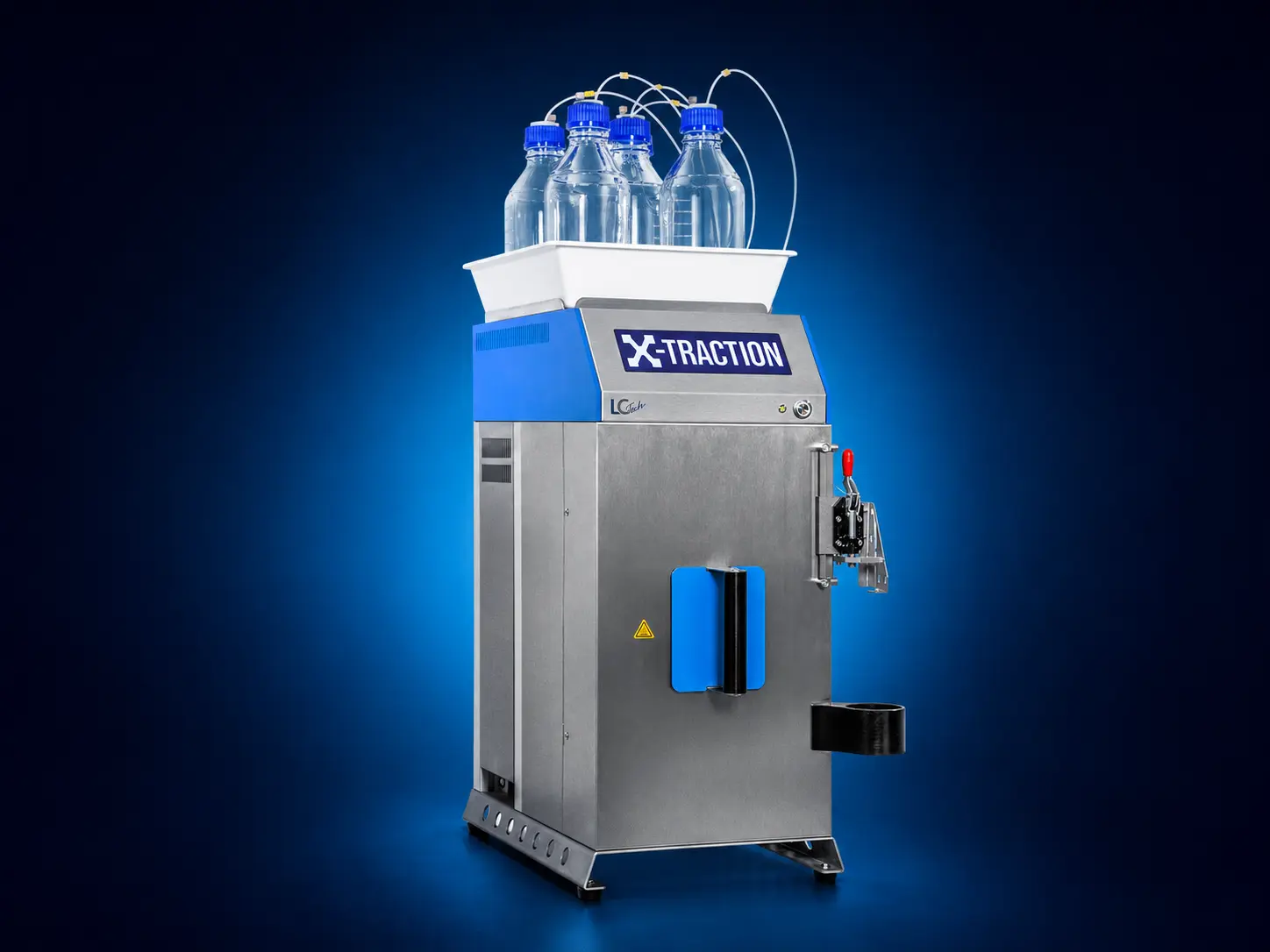
X-TRACTION supports standardized extraction and documentation of critical process events.
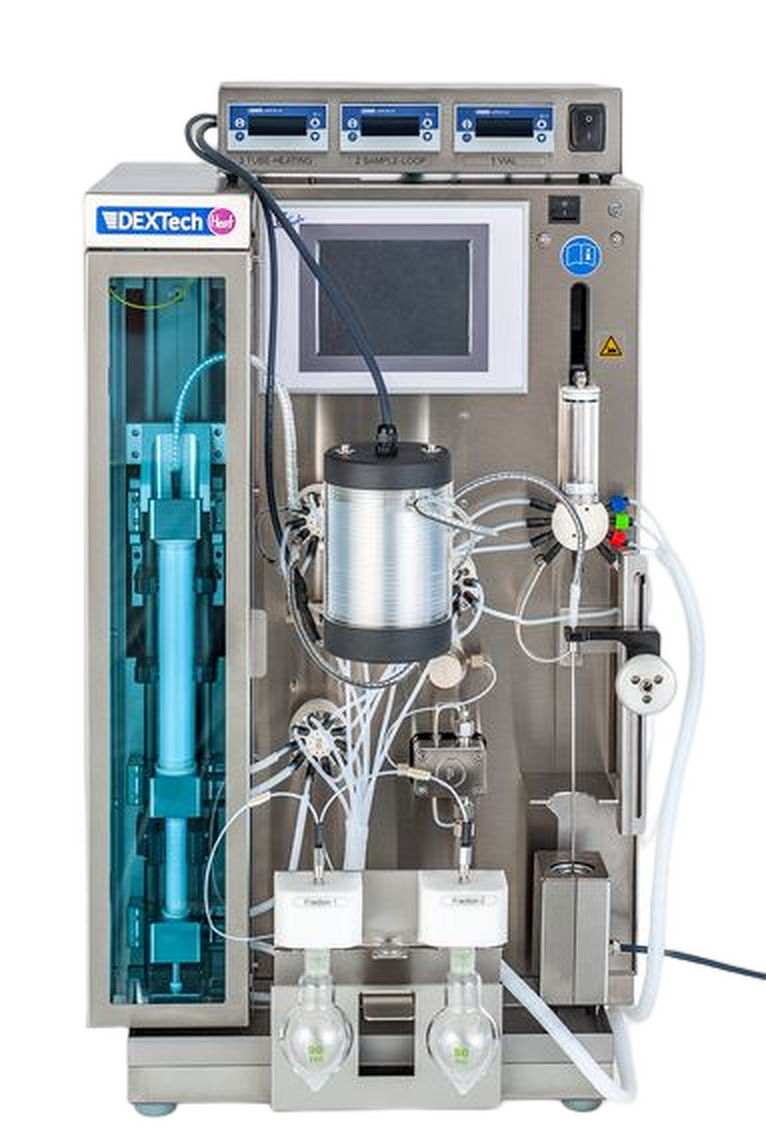
DEXTech Heat automates fractionation and clean-up, including lipid extracts that may solidify at room temperature.
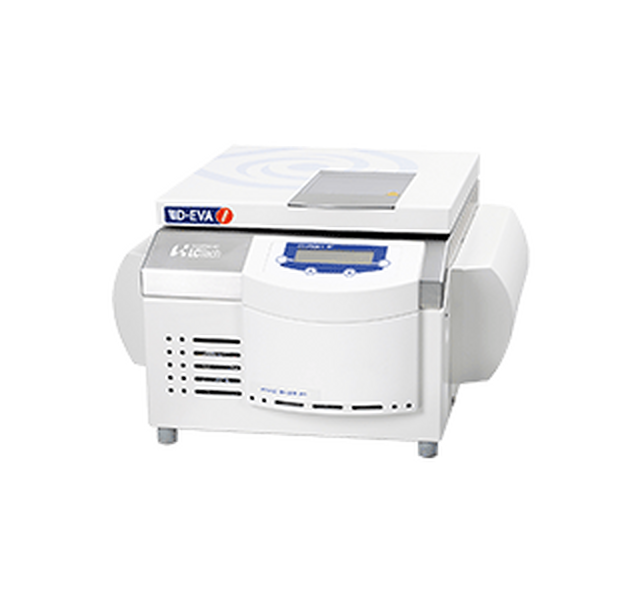
D-EVA reduces the extract to a working volume with end-point monitoring according to the method configuration.
The prepared extract proceeds to the technique defined by the validated method, such as HRGC/HRMS, with applicable quality controls.
REGULATORY INTELLIGENCE
Sets maximum levels for certain contaminants in food and repealed Regulation (EC) No 1881/2006.
Sets sampling and analysis methods for dioxins, dioxin-like PCBs and non-dioxin-like PCBs in certain foodstuffs.
Establishes general Halal food requirements across different stages of the chain.
Certificate issued to LCTech GmbH with a defined scope for DEXTech Heat and proprietary fractionation columns.
GCC · ASEAN · LATIN AMERICA
OWNED · EARNED · INSTITUTIONAL
Katálysis organizes the technical architecture, solutions and references in a permanent, citable location.
Katálysis connects sample preparation, dioxins, traceability, Halal supply chains and analytical confidence through articles and webinars.
Centro Halal da América Latina published the pioneering LCTech GmbH certification for the declared scope.
No. The certificate has a defined scope for the listed equipment and consumables. Food and supply-chain certification follows the requirements of the certification body and destination market.
Extraction, clean-up, fractionation and concentration affect recovery, interferences, variability, analyst safety and result traceability.
No. Regulation (EU) 2023/915 repealed it. Regulation (EU) 2017/644 remains a specific reference for sampling and analysis of dioxins and PCBs in certain foodstuffs.
KATÁLYSIS · LCTECH
Share the matrix, analytes, method, throughput and destination market. Katálysis will structure the technical discussion and the appropriate laboratory scope.