Where staff spend their time
Total person-hours. More analysts increase capacity; they do not reduce the total calculated work.


Plan sample preparation, staffing, and detection. Compare your manual workflow with ThermELUTE Light, FREESTYLE ThermELUTE, or CrossTOX.
SCENARIO REPORT
Preparation only includes extraction, dilution, filtration, and clean-up operation. Analysis includes sequence setup and results review. The full cycle adds these working hours together; elapsed equipment time is shown separately. Capacity continues to account for the entire workflow and its bottlenecks.
SELECTED EQUIPMENT AND COLUMNS
Quantities entered for each scenario; the two workflows are alternatives and must not be added together. Columns include controls and repeats requiring preparation. Estimated units required appear under “Sizing and capacity limits”.
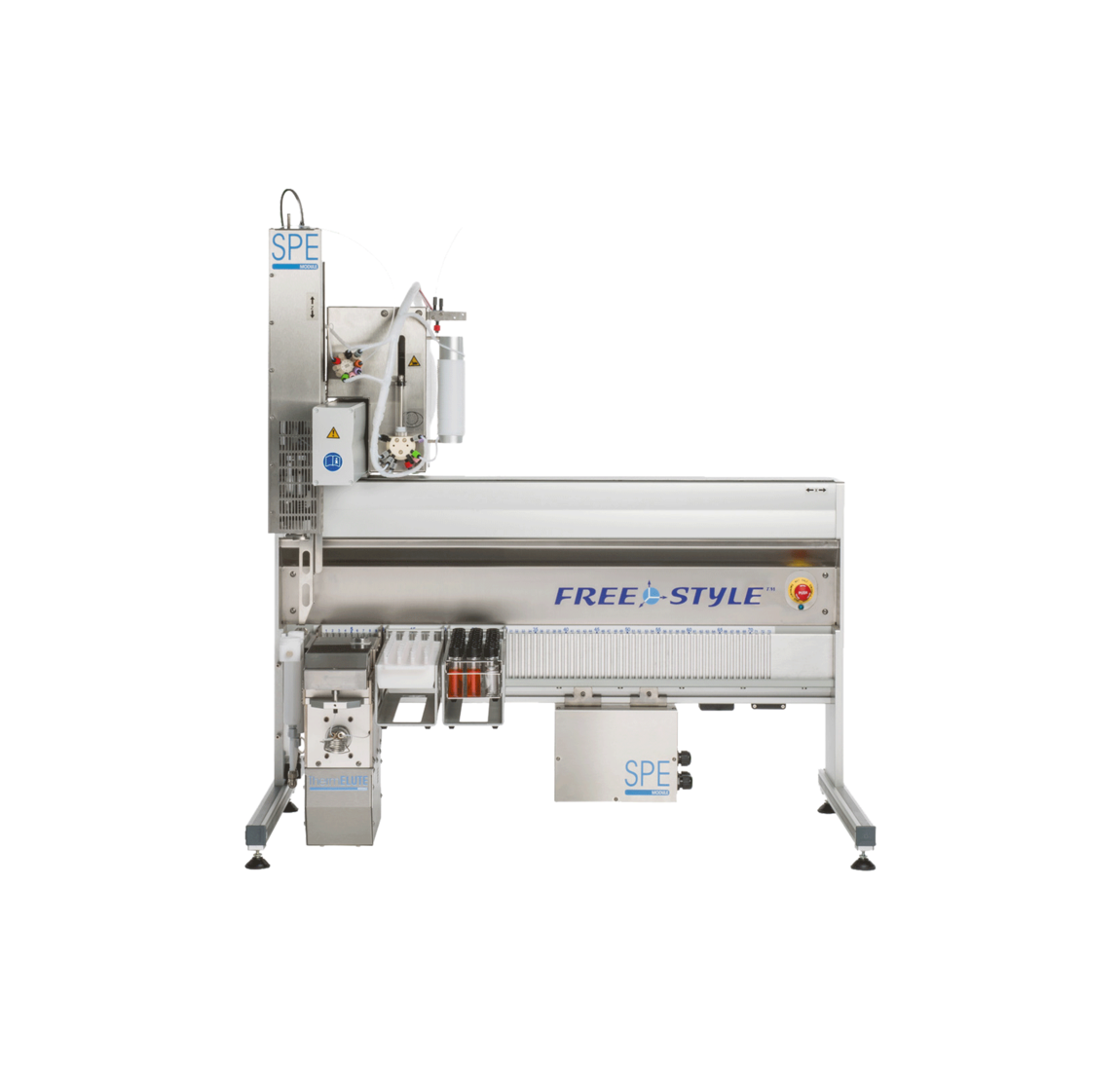
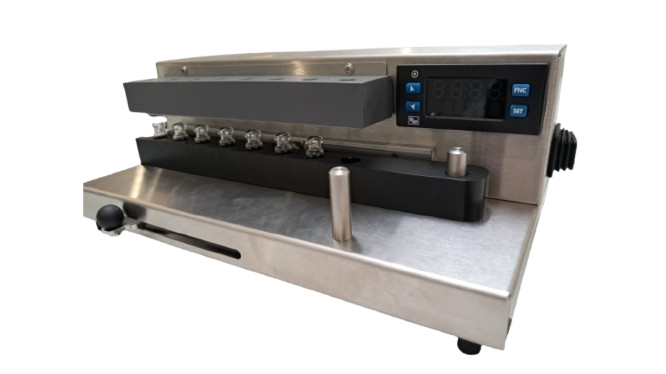
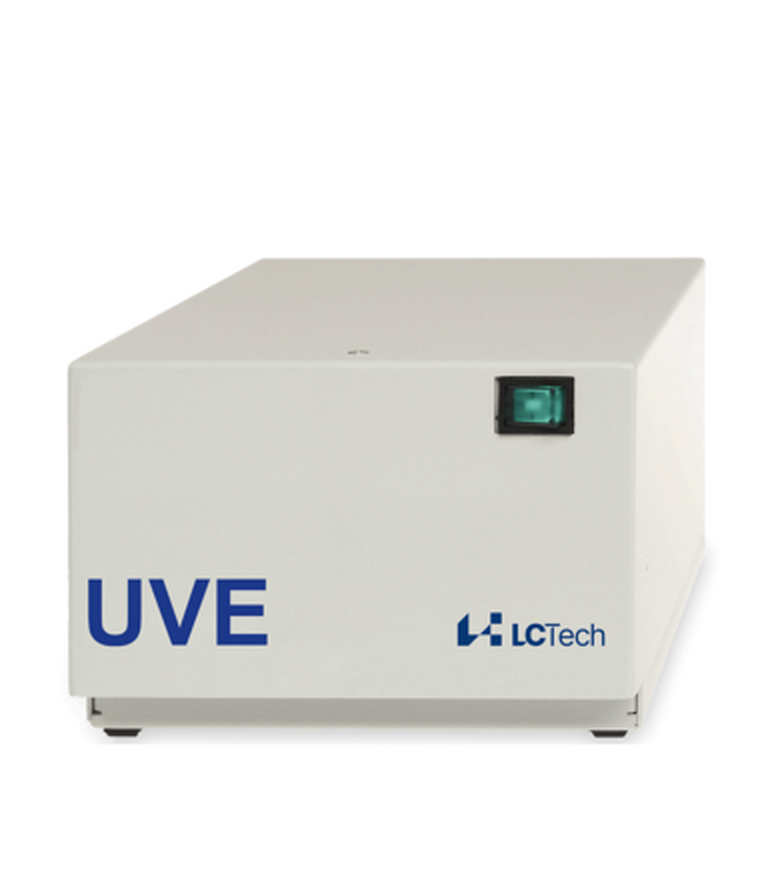
Photos identify the products or the family indicated in the caption. Quantities correspond to the entered scenario; review the sizing requirements before defining the configuration.
Total person-hours. More analysts increase capacity; they do not reduce the total calculated work.
Above 100%: workload exceeds the specified availability.
QUALIFICATION AND TRACEABILITY
FREESTYLE provides an individual preparation report for each sample. Its software supports sample identification and printing information through the report generator. [13] In manual preparation, this documentation relies on laboratory records, without equivalent automatic generation by the preparation system.
A configuration can undergo qualification using protocols, acceptance criteria and evidence appropriate to the model and intended use. The status of each unit depends on the laboratory completing and approving those records.
FREESTYLE can be qualified. Link the ID and serial number to software versions, installation, operational and performance checks, calibrations and applicable maintenance. Define the scope separately for FREESTYLE, ThermELUTE Light, UVE and HPLC/LC-MS/MS. Confirm with the supplier which documentation is available for each model; DEXTech forms do not replace mycotoxin protocols.
The LCTECH brochure states that a certificate with QC data is supplied. [12] Link the product, PN, lot, expiry date, receipt and storage to the corresponding certificate and sample sequence. The column certificate does not replace laboratory checks of method performance.
Link the sample, preparation, operator, method and version, equipment, column lot, standards, calibration, blanks, recoveries, replicates, incidents and technical review. Assess selectivity, limits of quantification, precision and uncertainty where applicable. These records allow the work to be reconstructed and support the analytical conclusion.
This is a planning report, not an analytical certificate or an instrument run record. Equipment that can be qualified is not necessarily a unit that has already been qualified. The calculator does not demonstrate accreditation, GMP+/MAPA/Inmetro compliance or regulatory acceptance. Documentary traceability and metrological traceability are distinct concepts.
Result documentation must reflect the method actually performed. The photos and sizing in this simulation identify the configuration; they do not demonstrate the installation, qualification or performance of a specific unit.
WORKFLOW SELECTION
Integrates clean-up using SMART IAC, thermal elution and online transfer to the HPLC. Can prepare the next sample during chromatography. Extraction, dilution, filtration and review remain part of the planning. [1, 2]
Columns: AflaCLEAN SMART, AflaCLEAN M1 SMART, and OtaCLEAN SMART. Each application uses its own column; Afla-OtaCLEAN 3 mL is not a combined SMART column. [5, 8, 9]
Manual, offline thermal elution, with up to eight positions at 98 °C. Keeps HPLC independent. The aqueous eluate may eliminate the need for solvent exchange, depending on the method. Loading, washing, and transfer still require intervention. [3]
Documented columns: AflaCLEAN SMART, AflaCLEAN M1 SMART and OtaCLEAN SMART. We do not infer support for other columns from the SMART name.
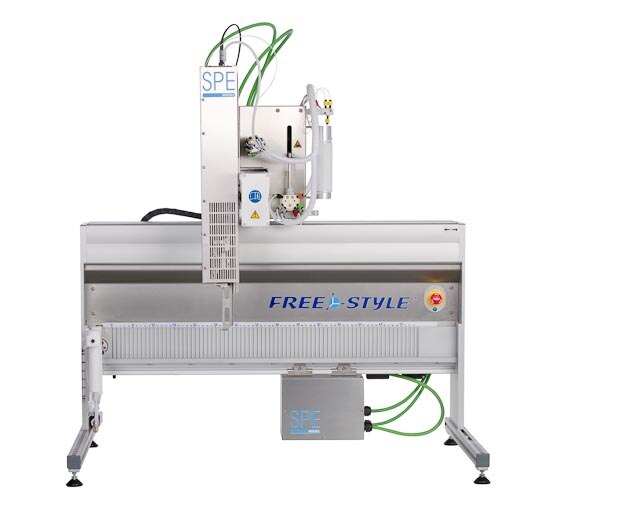
Automates offline preparation, collecting the eluate for later analysis. Afla-OtaCLEAN 3 mL belongs to the FREESTYLE SPE workflow. CrossTOX uses a dedicated SMART SPE column for automation, distinct from the manual variant. [5, 6, 8]
Representative photo of the FREESTYLE SPE platform. Accessories, column holders, and methods vary by configuration; this image does not represent every possible setup.
Inline photochemical derivatization enhances detection of aflatoxins B1 and G1. UVE is a detection step: it does not replace extraction, clean-up or the FLD detector. It is not used in the LC-MS/MS workflow. [4]
The calculation does not automatically assign a percentage time reduction to UVE. No derivatization benefit is assumed for OTA or M1.
TECHNICAL GUIDE FOR CUSTOMERS
Translated summary of the January 2024 LCTECH catalog. The specifications below are manufacturer statements; confirm the current version and lot label before purchasing or using. Shelf life is measured from manufacture, not receipt.
View the original LCTECH PDF (English)
Binding capacity in ng, extract volume and matrix mass do not represent samples per hour. These limits guide method loading and dilution. Published recoveries do not guarantee the same performance in every matrix.
Although it appears in the half of the brochure headed SPE, the product entry itself describes an immunoaffinity column. It is not a combined SMART column. The brochure does not document thermal elution on Light or online ThermELUTE.
Aflatoxins B1, B2, G1 and G2; OTA; zearalenone; DON; fumonisins B1 and B2; T-2 and HT-2; nivalenol; 3-acetyl-DON; 15-acetyl-DON; DON-3-Glc; sterigmatocystin; citrinin; diacetoxyscirpenol. The calculator assumes one injection for the full panel, according to the method, without multiplying the time by 18.
The brochure specifies use for DON, NIV, and glycosylated and acetylated derivatives, a matrix load of up to 4 g, and matrix removal > 75%. The marketing statement about unrestricted toxin loading is not treated here as infinite operational capacity.
This brochure provides no labor times, chromatographic cycles, prices or complete ThermELUTE compatibility matrix. It therefore updates the specifications and package price calculation without assigning time savings or enabling additional thermal workflows.
AflaCLEAN Select 1 mL is not listed in this brochure. Its historical reference remains separately identified in the calculator. B/G/M1/M2 cross-reactivity is stated in the AflaCLEAN M1 Select entry; it is not automatically transferred to all SMART columns.
Technical references consulted on 25/09/2026. Labor values and initial operating windows are editable assumptions unless a source is expressly indicated. The “measured” designation records the laboratory’s statement, without independent validation.
| Method / source | Documented time | Use in the calculator |
|---|---|---|
| LCTECH CrossTOX — AN1165 (2022) | 16 min LC program | Includes return to initial conditions and re-equilibration. Add any additional interval; confirm coverage of the 18 analytes in the matrix. |
| Shimadzu LCMS-8060 — C165 | 12.5 min | Panel of 18 differs from CrossTOX: does not include DON-3-Glc, citrinin or sterigmatocystin. Not applied as an equivalent shortcut. |
| Thermo TSQ Quantis — AN65969 | 15 min, including re-equilibration | Broader panel and a separate method; 3+15-acetyl-DON reported together. Does not demonstrate 18 individual CrossTOX quantifications. |
| Waters Xevo TQ-XS — 720007476 | 11.5 min | Panel of 50; not a CrossTOX method. Citrinin is not listed in the analyte table. Not applied automatically. |
| LCTECH B/G + UVE — AN0038 | B1 retention time of 7.7 min | Retention time is not a complete cycle. Use measured run time + interval; the initial 20 min is an editable assumption. |
| LCTECH OTA — AN1173 | 20 min from extract to result | Includes preparation and analysis after calibration; this does not mean 20 min of HPLC alone. |
| LCTECH M1 — AN0006 (2019) | ~30 min, preparation + individual analysis | With overlap, the cycle time may differ. The initial 30 min HPLC setting is a conservative assumption, not a separately published cycle. |
Preparations = client samples + ⌈client samples × repeat %⌉ + controls per batch × ⌈(client samples + repeats)/QC batch size⌉. The specified QC batch size excludes controls. Each preparation produces one injection; additional instrument injections are added separately.
Person-hours = (hands-on minutes per preparation × preparations + hands-on minutes per batch × batches + sequence operation + review)/60. Shared hours remain in both workflows.
Online: integrated cadence × preparations, plus extra instrument injections. The greater of the cadence and the HPLC cycle is used. In measured mode, a line with P preparations occupies p + c + (P−1) × maximum(p,c), where p = preparation and c = HPLC. For multiple lines, startup is added for each line used; sizing is an aggregate estimate.
Light: ⌈preparations/loading positions⌉ × loading time + ⌈preparations/elution positions⌉ × (heating + changeover). No overlap between these blocks is assumed. HPLC is counted separately.
Separate teams: preparation work = common steps + clean-up operation; analysis work = sequence + review. Each workload is compared with its team’s available time. When the same analysts perform both, we add the two workloads and use one pool of available hours. Splitting the team does not reduce the total hours required.
Available staff: analysts per shift × number of shifts × days × (shift duration − lunch/breaks in hours) × allocation. Shifts use separate teams. Total shift durations cannot exceed 24 h/day; equipment operating windows are entered separately.
Capacity: the largest whole number of samples whose labor and equipment use fit within the specified operating windows, including QC/repeats. This is a workload-based planning limit, not a schedule simulation. Lunch reduces staff availability; interventions during breaks are not scheduled minute by minute. Online preparation and HPLC availability represent the specified shared productive operating window; confirm that their operating hours coincide. Queues, reloading outside shifts, initial heating, method changes, failures, and the actual schedule may reduce throughput. Capacity for the preceding extraction step is not sized; its staff labor is included.
Elution: columns consumed × volume per column (µL)/1000 = mL in the period. Cost = mL × price per mL. Consumption excludes losses, washing, and line priming. The 400 µL reference is applied only to Light for documented matrices, with B/G and OTA processed separately.
Costs: include only components that have been entered. Monetary comparison requires the same components in both workflows. Break-even price = (manual column cost + difference in hours × hourly cost)/columns in the comparison workflow; includes only columns and labor. Freed-up hours represent capacity, without guaranteeing payroll reductions or a return on investment.
The initial stabilization allowance is added once per specified startup/sequence, without treating it as hands-on labor time. Methods, recoveries, limits of quantification, matrices and scopes must be equivalent for a useful comparison. This tool does not validate methods, certifications or regulatory acceptance.